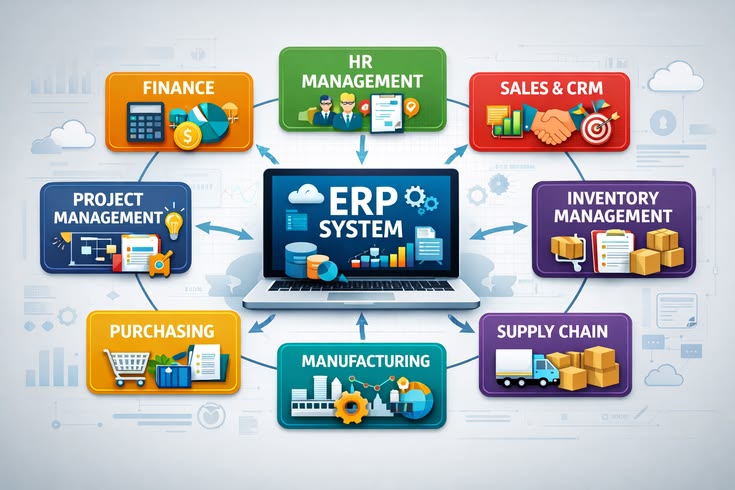
How ERP Software Helps Small Businesses
Running a small business often means managing multiple areas at the same time.
Accounting may be handled in one application, inventory in spreadsheets, employee information somewhere else, while sales and purchasing records may exist in separate systems.
As a business grows, these disconnected processes can make it harder to maintain accurate information and get a clear view of day-to-day operations.
This is where ERP software can help.
An ERP, or Enterprise Resource Planning system, brings different business processes together in a centralized platform. Depending on the solution, an ERP can manage areas such as accounting, inventory, sales, purchasing, human resources, payroll, reporting, and workflow approvals.
For small businesses, the goal isn't simply to have more software. The goal is to create a more organized way to manage business operations.
Why Do Small Businesses Need ERP Software?
A business may start with spreadsheets, individual applications, and manual processes because these methods are relatively simple when operations are small.
However, as the business grows, several challenges can appear.
Disconnected Information
Different departments may maintain separate records.
For example:
Sales
   ↓
Spreadsheet

Inventory
   ↓
Separate File

Accounting
   ↓
Accounting Software

HR
   ↓
Separate Records
This can make it difficult to maintain a consistent view of business operations.
An ERP can bring these processes into a connected system.
1. Centralize Business Information
2. Improve Accounting and Financial Management
3. Manage Inventory More Efficiently
4. Connect Sales and Purchasing
5. Manage Employees and Payroll
6. Automate Repetitive Business Processes
7. Improve Business Reporting
8. Reduce Duplicate Data Entry
9. Improve Departmental Collaboration
10. Support Business Growth
What Features Should Small Businesses Look for in ERP Software?
Accounting & Finance
Inventory Management
Sales Management
Procurement
HR & Payroll